
You just spent thousands on a kitchen upgrade. Six months later, the cabinet finish is peeling at the edges and chipping near every handle. Now you are stuck wondering whether the problem was the painter, the product, or the process. If this sounds familiar, you are not alone. And you are right to ask whether fine spray coating for cabinets is the answer.
Here is the short version. Fine spray coating for cabinets can reduce peeling and chipping — but only when the right coating types for cabinet surfaces are paired with proper prep work and adequate cure time. The method matters, yet it is not the whole story. Below, we break down why spray finishes outperform brush-and-roller applications, which coating types offer the best cabinet durability in Troy, MI’s climate, and what to look for when hiring a cabinet painter.

Why Cabinet Finishes Fail in the First Place
Before we talk about solutions, let’s name the real problem. Most cabinet finish failures come down to three mistakes: poor surface preparation, wrong product selection, and rushed cure times. According to industry professionals, these three errors cause the vast majority of early cabinet paint failures.
So when homeowners in Troy see peeling around their sink or chipping near their most-used drawers, the issue usually is not the cabinet itself. It is what was put on it — and how.
That matters because cabinet painting is not the same as wall painting. Cabinets are high-touch surfaces. They deal with grease, steam, moisture, and constant opening and closing. A finish that works fine on a bedroom wall will break down fast on a kitchen cabinet door. This is why choosing the right coating types for cabinet projects is so important from the start.
How Fine Spray Coating for Cabinets Creates a Stronger Bond
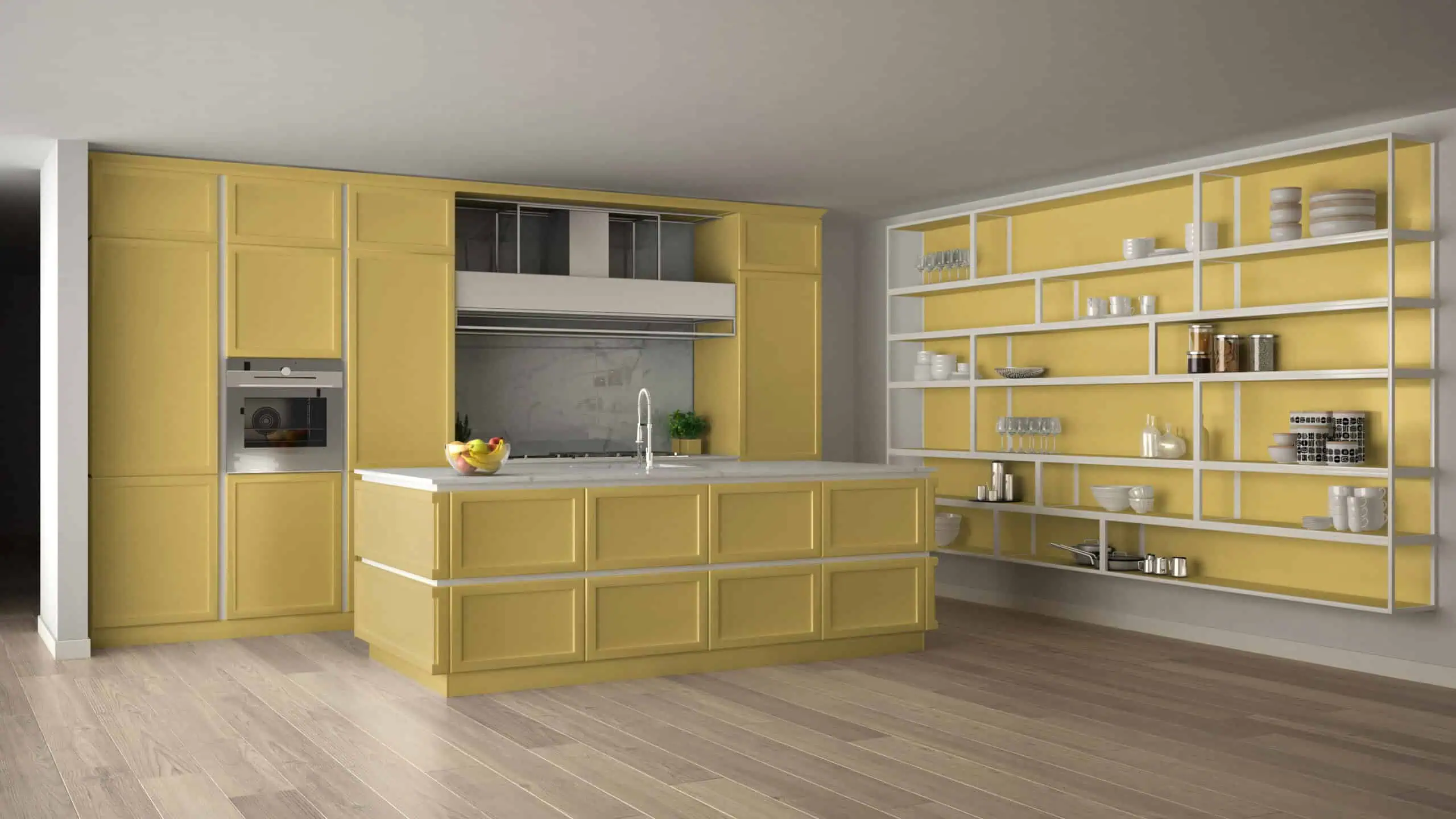
Fine spray coating for cabinets uses HVLP (High Volume, Low Pressure) spray equipment to atomize paint into a fine mist. The result is a thin, even layer that adheres uniformly across the entire surface. Unlike a brush or roller, which can leave texture marks and uneven buildup, a spray application delivers consistent film thickness from edge to edge.
This consistency is what makes spray finishes more resistant to peeling and chipping. Thick spots created by brush strokes or roller marks dry unevenly. Those uneven spots become weak points where the finish cracks and lifts over time. A professional house painter using fine spray equipment avoids this entirely.
Additionally, spray application allows for multiple thin coats rather than one or two heavy ones. Industry best practice calls for two to three thin coats with proper drying time between each. This layered approach creates a harder, more flexible finish that moves with the wood rather than cracking against it. A skilled cabinet painter knows that patience during application is what separates a five-year finish from a ten-year finish.
Which Coating Types for Cabinet Projects Hold Up Best?
Not all coatings are created equal. The coating types for cabinet refinishing fall into several categories, and each performs differently under daily kitchen stress.
For Troy, MI homeowners specifically, choosing a coating type for cabinet durability that handles moisture fluctuation is critical. We will explain why in the next section.
Troy’s Seasonal Humidity: The Hidden Threat to Your Cabinet Finish
Here is something most homeowners do not think about. Troy, Michigan, has a humid continental climate with relative humidity ranging from 74% in summer to 85% in January and February. That is a significant swing throughout the year.
Wood naturally absorbs and releases moisture in response to surrounding humidity. When humidity is high, wood expands. When humidity drops in winter — especially with forced-air heating drying out indoor air — wood contracts. This expansion-and-contraction cycle puts stress on any coating applied to the surface.
If the coating is too rigid, it cracks. If it was applied too thick, it peels at the joints. If the wrong product was used, it lifts away from the wood entirely. Cabinet manufacturers recommend maintaining indoor relative humidity between 30% and 55% to keep cabinetry stable. However, many Troy homes swing well outside that range when neither a humidifier nor a dehumidifier is running.
This is exactly why fine spray coating for cabinets matters so much in this area. A thin, even, flexible finish applied by a professional house painter can handle the seasonal movement of the wood far better than a thick, uneven brush or roller application. And when the right coating types for cabinet surfaces are selected — products designed to flex with the wood — peeling and chipping become far less likely.
What to Look for When Hiring a Cabinet Painter

Now you know the method matters. You know the product matters. And you know Troy’s climate adds an extra challenge. So how do you make sure the job gets done right?
First, ask your cabinet painter what products they use. A professional house painter focused on cabinet painting should be able to name the specific primer, paint, and topcoat they plan to apply. If they cannot, that is a red flag.
Second, ask about their prep process. Proper cabinet painting requires removing doors and hardware, cleaning, degreasing, sanding, and priming before a single coat of finish goes on. Skipping any of these steps is the top cause of early finish failure.
Third, ask about cure time. Most cabinet coatings need a minimum of 48 hours before the doors should be handled, and full cure can take up to 30 days. During that period, the finish is vulnerable to scratches, dents, and peeling. A reputable cabinet painter will tell you this upfront.
Finally, ask whether they use fine-spray coating for cabinets or a brush-and-roller method. Both can produce good results in the right hands. However, for the smoothest, most durable finish — especially on flat-panel and shaker-style doors — fine spray application is the industry standard.
The Cost of Getting It Wrong
Ignoring the coating types for cabinet durability or hiring the wrong crew is not just frustrating. It is expensive. Professional cabinet refinishing typically costs between $1,500 and $5,000, depending on kitchen size and product selection. However, if the finish fails early, repairing chipped or peeling cabinets can add $500 to $2,000 in additional costs for stripping, re-prepping, and repainting.
And if the damage is extensive, a full cabinet replacement can cost $5,000 to $15,000 or more. That is money you should never have to spend if the job is done right the first time.
Fine spray coating for cabinets, applied by an experienced professional house painter using the correct coating types for cabinet surfaces, protects your investment and keeps your kitchen looking fresh for years.


